

“How often should Birmingham businesses carry out PAT testing?” It’s a question we’re frequently asked by businesses across Birmingham. The answer – it depends.
PAT testing frequency will vary based on factors such as equipment type, usage patterns and the surrounding environment. This guide will cover how these factors will impact how often you need portable appliance testing and how to create a realistic PAT testing schedule your business can follow to ensure continued electrical safety and compliance.
Is There a Fixed Legal PAT Testing Frequency?
The law does not state how regularly PAT testing (it is NOT a legal requirement) should take place or give fixed intervals when electrical appliances should be tested. Employers and those responsible for equipment have a general duty to keep electrical equipment safe by law ( Electricity at work regulations 1989 & The health and Safety at work act 1974 ).
PAT testing is recognised as one way of managing your equipment to ensure it is safe and provides evidence that you are complying with the law. Testing should be carried out depending on the risk assessment carried out previously.
Employers and responsible persons should have sensible systems in place for managing electrical safety. They should do this by using combined inspections of visual examination with periodic testing.
What Affects How Often Appliances Should Be Tested?
Different types of electrical appliances, as well as how they are used and where they are used can affect how often PAT Testing needs to be completed.
- What type of equipment is it? Equipment used extensively and more likely to suffer wear and tear (such as power tools) may require more frequent PAT Testing when compared to equipment that is used infrequently (such as desktop computers)
- How often is it used? Equipment used regularly will need closer monitoring than equipment used only occasionally.
- Is the equipment transported around? Or used by numerous individuals? This equipment could be at greater risk.
- Is the equipment used in harsh/worksite environments? Workshops, construction sites, kitchens etc. can expose appliances to damage from impact, as well as moisture, dust and heat.
- Old equipment or visibly faulty equipment may need testing more frequently.
- Is the equipment used by knowledgeable employees? Or is it used by the general public? Certain equipment used by temporary staff or hired workers may also be at greater risk.
- Did the appliance previously fail its test, or show any electrical faults?
- Refer to any instructions provided by the manufacturer of the appliance.
Lower-Risk Environments: Offices and Admin Areas
Office areas and administrative departments are generally low-risk environments for electrical appliances. Common appliances found in offices include:
- Desktop computers and computer monitors
- Chargers and docks for mobile devices
- Printers and scanners
- Kettles and toasters in office kitchen areas
Office electrical appliances will often only require testing every two or four years if they are well maintained, in good working order and are not handled roughly. However, appliances should still be checked by users on a regular basis, along with visual inspections being carried out to check for visible damage, such as cables being frayed or damaged plugs.
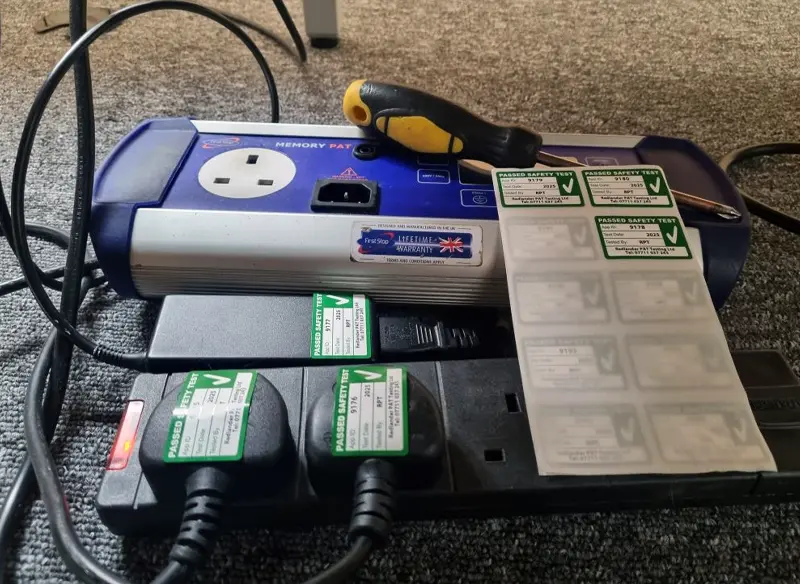
Keeping records of tests and having an appliance register will allow businesses to keep track of when the next test is due.
Higher-Risk Environments: Workshops, Warehouses and Hospitality
Workshops, warehouses, catering facilities and other similar locations where electrical equipment is more likely to get damaged or worn will usually require more frequent testing. This may be due to:
- Frequent use of power tools and heavy equipment
- Exposure to moisture, heat, dust and other contaminants and mechanical damage
- Extensive use of extension leads and portable equipment such as heaters and cleaning equipment
- Equipment being moved around frequently
For instance you might test power tools and site equipment at construction sites every three months but all other equipment every six to twelve months based on risk assessment.
These types of environments can take advantage of risk based PAT testing frequencies which take account of the increased likelihood of electrical hazards.
Rental Properties, HMOs and Shared Accommodation
If you provide appliances in rented accommodation including Houses in Multiple Occupation (HMOs) as a landlord or property manager then you will also have questions around risk assessment and complying with regulations. When deciding how often you should test:
- appliances provided by the landlord
- shared between tenants
- higher turnover of tenants leading to wear and tear
- communal areas with shared electricals
You should keep test records and certificates for each property to cover your due diligence. Although there is no set legal timeframe for testing, landlords tend to either test yearly or at the intervals specified by a competent person after they have assessed the risks.

Education Settings and Public-Facing Premises
Educational establishments including schools, nurseries and colleges will often have extensive amounts of electrical equipment that’s used by both staff and students or the general public. Children using electrical equipment can put a greater need for PAT testing and thorough inspection and testing.
Times when testing won’t interfere with term dates or times when the public can come into contact with the equipment should be worked out in advance to minimise disruption. Computers, kitchen equipment, projectors and other portable electrical appliances will all require regular PAT testing, normally annually or determined by a risk assessment.
Signs an Appliance Should Be Checked Sooner
Occasionally out of routine: Whenever the following defects are found, inspection is required urgently or more frequently:
- Damaged or cracked plug
- Damaged/frayed or exposed cables
- Damaged or cracked casing
- Burn/scorch marks close to plugs or cables
- Loose connections / flickering/intermittent supply
- Equipment overheating / hot to touch
- Odours (i.e. burning or melting plastic)
- Any damage caused by dropping/equipment being knocked
- Damaged extension leads/sockets
Electrical testing must be carried out as soon as these faults are discovered during a scheduled visual inspection or during user inspections.
Creating a Practical PAT Testing Schedule
Here are some tips Birmingham businesses can use when creating their PAT testing schedule:
- Categorise appliances by level of risk depending on the type of appliance, its use and where it is used
- Keep an appliance register so you know exactly what equipment you have
- Conduct your PAT tests out of hours, during school holidays or at the end of a tenancy
- Schedule in visual inspections carried out by the user between PAT tests
- Regularly review your PAT schedule, e.g. if you purchase new equipment or have an electrical incident
- Keep your test records and certificates. These can prove that your equipment was safe at the time of testing and help you track when the next test is due
This risk-based approach means PAT testing is carried out when it’s required, but not more often than necessary.
Summary
How regularly do businesses need to schedule PAT testing? There’s no definitive answer to that question. It depends on what equipment you’re testing, how often you use it, where you use it, the condition it’s in and what risks you might face.
As a general rule of thumb, though, employers should have a risk-led approach when deciding how regularly they test PAT units in line with UK health and safety regulations and good practice guidance.
Regular visual inspections alongside a logical testing schedule will keep your workplace safe and demonstrate you’re taking a proactive approach to managing electrical safety. Accurate records of these tests also help you to meet your legal duties as set out in the Electricity at Work Regulations 1989 and other legislation.
Talk to Redlander PAT Testing if you need help working out a PAT testing schedule that’s right for your business. We’ll lay out your options clearly and offer flexible booking options if you would like PAT testing in Birmingham.

FAQ
Frequently Asked Questions
Common questions about PAT testing frequency, legal responsibilities, HSE guidance, testing schedules and who should carry out portable appliance testing.
How often does a business need to do PAT testing?
How often a business needs PAT testing depends on the appliance type, how often it is used, the environment it is used in and the level of risk involved. Some higher-risk equipment may need testing as often as every three months, while lower-risk office equipment may only need testing every two to four years.
Is PAT testing a legal requirement?
There is no fixed legal requirement for how often PAT testing must take place. However, employers and landlords have a legal responsibility to make sure any electrical equipment they provide is safe. PAT testing is one recognised way of helping to meet those electrical safety duties.
What is the Health and Safety Executive’s guidance on PAT testing?
HSE guidance supports a risk-based approach, rather than setting fixed testing intervals for every appliance. Electrical appliances should be tested as often as necessary, with regular inspection and maintenance forming part of your wider electrical safety management.
How can I create a PAT testing schedule for my business?
A practical PAT testing schedule should group appliances by risk, keep a clear appliance register, plan testing around business needs and keep records up to date. Between formal PAT tests, users should also carry out simple visual inspections to spot obvious damage or defects.
Who should perform PAT testing?
PAT testing should be carried out by a competent person. This means someone with enough knowledge, training and experience of the equipment and its use to safely complete visual inspections and electrical testing in line with recognised guidance.
Contact Redlander PAT Testing
Keep your school’s electrical appliances safe with professional PAT testing from Redlander PAT Testing. Contact us today for straightforward advice and dependable service, designed with Birmingham schools and educational establishments in mind.
For Birmingham PAT testing, contact us or use the form below to book your PAT testing service.
AVAILABLE THROUGHOUT THE MIDLANDS AND BEYOND
- Birmingham
- Bromsgrove
- Cheltenham
- Coventry
- Dudley
- Gloucester
- Gloucestershire
- Herefordshire
- Kidderminster
- Nuneaton
- Redditch
- Solihull
- Staffordshire
- Stroud
- Tewkesbury


GET IN TOUCH
Fill in the form below